

Being a responsible member of a community
 Welcome to a new school year!
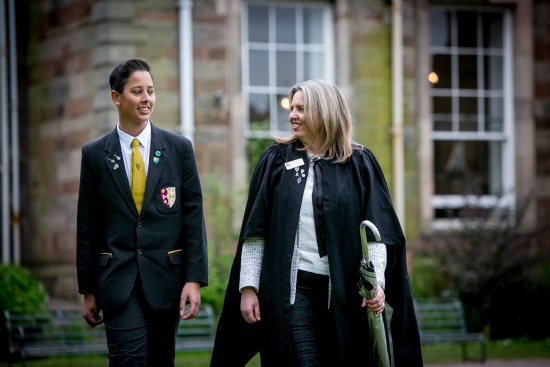
It's lovely to see pupils and students returning to school, or joining us for the first time, in their smart uniforms, excitedly chattering away with their friends. Every day is a chance to learn, grow and make a difference - I hope all pupils will embrace this new school year with curiosity, courage, joy and a generous spirit.
No one has ever become poor by giving - Anne Frank
I have often said that schools do not simply prepare children for examinations; they prepare them for citizenship. One of the greatest responsibilities we have is helping young people understand that they belong to something bigger than themselves. I often comment to pupils that given they have the privilege of being educated here at the Cathedral School, they need to consider how to ‘give back’ and help those who are less fortunate than themselves.
Thus, to be part of a community means recognising both privilege and responsibility. It means understanding that our actions affect others. It means remembering those who may be struggling - families facing hardship, neighbours experiencing loneliness, or children around the world without the opportunities we sometimes take for granted.
Living in Lichfield, we are fortunate to be surrounded by a strong sense of community and heritage. Yet privilege should never produce entitlement; it should inspire service, which is, of course, one of our core values.
Research consistently shows that children involved in volunteering, service activities, and community engagement develop stronger empathy, responsibility, and wellbeing. A large longitudinal study following over 2,700 students found that participation in volunteering and service-oriented extracurricular activities was strongly associated with increased empathy and altruistic behaviour later in life.
Parents play a crucial role here. Children learn generosity first at home: helping a sibling, writing a thank-you note, donating to a food bank, checking on an elderly neighbour, or giving time as well as money.
School helps shape this too. Harvest collections, charity events, remembrance services, and acts of service are not “extras” - they are central to a moral education. They teach children that compassion must be both heartfelt and practical.
In a world increasingly focused on individual success, we must remind children that true greatness often lies in quiet acts of kindness. Success without service is incomplete.
Put simply, it’s time for the culture of ‘selfies’ to become the culture of ‘others’ as we turn our focus from inwards to outwards and all the benefits that brings. We also want children to understand that responsibility includes gratitude. When we remember those who are worse off, we are not encouraging guilt, but perspective. Our aim is to raise young people who ask not only, “What can I achieve?” but also, “How can I help?”
Inservi Deo et laetare